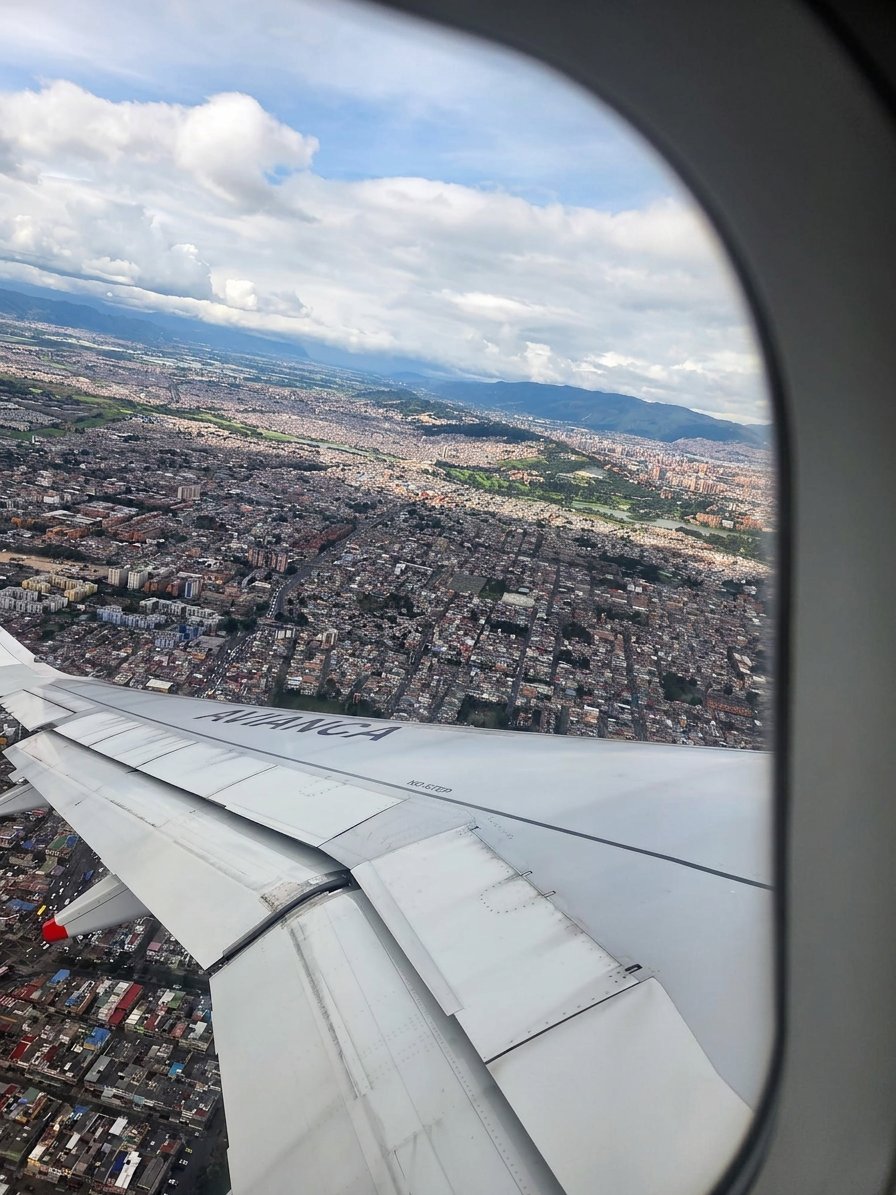
Does anyone else struggle with long flights? And I mean those 10-plus hours of just sitting, waiting and wondering whether you are actually getting any closer to your destination.
Sometimes a long flight feels even longer depending on where you are going whether you are travelling towards something exciting or something dreadful. Unfortunately, for those of us who have settled away from family in the diaspora, we have had to travel for both.
I remember flying from Canada to Zimbabwe for my dad’s funeral. Time really stood still. It seemed as though the plane was not moving at all. Every hour felt unusually long, and the distance between Canada and Zimbabwe had never felt greater. I have also travelled the same route for my twin sister’s wedding. Somehow, that flight seemed to get there really quickly. It felt like the shortest journey to Zimbabwe I had ever taken. Same route. Similar flight hours. Completely different emotions and completely different experiences of time.

Research on subjective time perception suggests that time can appear to move particularly slowly during stressful or emotionally difficult periods. How we experience time is influenced not only by the clock, but also by what we are feeling while we wait.
During my recent flight from Kenya, I started thinking more deeply about the concept of confinement. When I began looking through some of the research, I noticed that confinement is most commonly discussed in the context of incarceration, detention or isolation. Naturally, these are much more severe and largely involuntary forms of confinement. I am not comparing the temporary discomfort of a flight to the realities of incarceration. However, the research made me think about what different forms of confinement may have in common.
Perhaps confinement is not only about being physically enclosed. It can also be about having very limited control over your movement, your time, your environment and your choices. One thing that seems common across many forms of confinement is that it is barely a choice or, at the very least, choice becomes complicated.
You could argue that flying is completely voluntary. You choose to book the ticket. You choose to travel. You know that the journey will be long, and you mentally prepare yourself for it. But I think that when I am boarding, my brain knows that it will be a long-haul flight without fully registering what that means practically. It means that, for the next 10 or 15 hours, I cannot simply decide that I have had enough and leave.
A flight may be voluntary at the point of booking, but once you are on board, your choices narrow dramatically. You cannot choose how much space you have. You have limited control over when you eat, what you eat, when the lights are switched off or when you can move around. Even going to the bathroom may require negotiating with strangers, climbing over someone or waiting for the seatbelt sign to be switched off.
You also have no choice about who sits beside you. You may find yourself next to someone who wants to talk for the entire journey, someone who takes over the armrest or someone who falls asleep before take-off and becomes almost impossible to wake…. That last one is me by the way…There are choices, but they often feel like variations of “take it or leave it.”
So, what do people normally use this confinement to do?
Some become restless. Some finish an entire book. Some write. Some watch several movies. Some sleep for most of the journey. Others simply sit there, staring at the flight map and checking every few minutes whether the small plane has moved. I have become each one of these people depending on my mood. I used to sleep through most flights, but now I do not. I find myself increasingly aware of the time, the limited space and the fact that there is nowhere else to go.
On a tangent….
About a while ago, while visiting the National Building Museum in Washington DC, I saw a statement that stayed with me: we spend close to 90 percent of our lives indoors. The figure is supported by environmental research showing that people spend approximately 90 percent of their time inside buildings. That made me wonder: if we already spend most of our lives indoors, why can 10 hours inside an aeroplane feel so dreadful?

Perhaps the issue is not simply being inside. At home, I can move between rooms. I can open a window, step outside, choose what to eat, change the temperature, decide who enters my space or leave altogether. The walls are still there, but I retain a sense of control. On a plane, the physical enclosure is combined with restricted movement, limited privacy, predetermined routines and the knowledge that leaving is impossible until the journey ends.
Is confinement, then, less about walls and more about the absence of meaningful choice? I also recently visited a vineyard for a wine tasting. The guide showed us a particular grapevine that needs a controlled amount of stress, periods with limited water, to produce the type and quality of fruit the vineyard wants. Research on wine grapes similarly suggests that moderate and carefully managed water stress can sometimes improve fruit characteristics, although the timing and severity of that stress matter.
That also stayed with me. There is something interesting about the idea that limitation can sometimes produce concentration, adaptation or even quality. Yet too much stress, imposed for too long or without the right conditions, can also cause damage. Perhaps that is why people respond so differently to long flights and other confined spaces.
I am left with more questions….as always…
Does confinement create space for reflection because distractions and choices have been removed? Or do we sometimes romanticize restricted conditions simply because we managed to produce something within them?
Does limitation affect us differently when we choose it, when we know exactly when it will end, or when we believe there is something worthwhile waiting at the destination?
And when does confinement become productive pressure and when is it simply restriction?

Leave a Reply