How perspective, power, and assumptions shape the problems we think we see..
We live in a world where it has never been easier to observe how other people live. The internet places entire cultures, communities, and lifestyles within reach of a screen. We watch how people eat, worship, raise families, organize work, and define success.
We also move across the world more than ever before. According to the United Nations World Tourism Organization, international tourist arrivals grew from around 25 million in 1950 to more than 1.4 billion before the pandemic. Even with recent disruptions, global mobility today is far greater than it was in the 1960s or 1970s.
In theory, this level of exposure should deepen understanding. Seeing how others live should expand our imagination and perhaps even grow our respect for different cultures, values, and ways of organizing life.
And yet something curious happens.
Despite unprecedented access to information and global contact, we still carry assumptions about how other people should live, what they should value, and what problems they should be trying to solve.
This happens in many situations. It could be a Christian from one church seeing themselves as better than another, Christians and non-Christians judging each other, Christians vs. Muslims, white vs. Black, women vs. men, people in developed countries vs. those in developing ones, humanitarian workers vs. the communities they are trying to assist. The list is endless.
We don’t have an Ant Problem
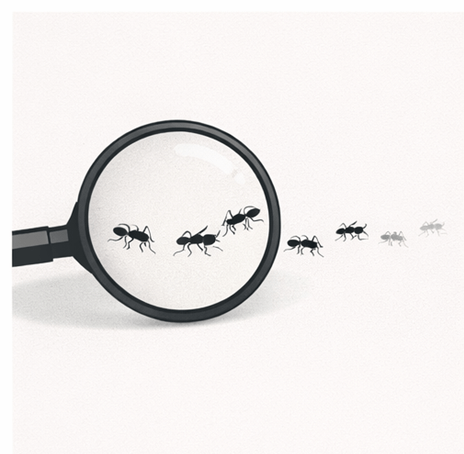
Assumptions also appear in our everyday lives, including in situations we might easily disregard or overlook. For example, I visited a house recently and noticed ants on the floor. There were not many, but they were noticeable. I currently have ants in my apartment too, so maybe that’s why I noticed them quickly. Anyone who has experienced Pharaoh ants may know that they can be a nuisance and very difficult to get rid of. They are tiny, faint-coloured little things, but somehow very noticeable.
In this house, they were a different type of ant, still tiny but noticeable.
When I was in the washroom, I shouted,
“Oh, you also have an ant problem!”
The host responded,
“We have ants, but we didn’t think they are a problem. They’re not bothering us.”
That moment stayed with me.
To me, there was clearly a problem. To them, there wasn’t. It made me think about how often we walk into someone else’s life and quickly identify what we believe to be their “ant problem.” We see something unfamiliar, uncomfortable, or simply different from what we would tolerate, and we label it a problem.
But the people living in that space may not experience it that way at all.
… again with the internet..
The internet has served as both a gift and, in some ways, a complication. It has allowed us to see more of the world than ever before. But it has also exposed us to carefully curated narratives about how people should live, what success should look like, what problems are worth worrying about, and what solutions are acceptable.
What we often fail to realize is that much of what we consume online is intentionally shaped. Algorithms, influencers, media outlets, and institutions all participate sometimes consciously, sometimes not in constructing narratives that guide how we see the world.
However, this phenomenon did not begin with the internet. Long before algorithms and social media feeds, similar processes were already shaping how societies interpreted one another. Colonialism, missionary expansion, and various forms of evangelism often operated through narratives that framed indigenous communities as backward, uncivilized, or in need of saving. Settlers arrived convinced that they already understood what was wrong and what needed fixing.
Historians and scholars have written extensively about this mindset. Edward Said, in Orientalism (1978), argued that Western societies constructed images of other cultures that justified intervention and control, often portraying them as inferior or incapable of self governance. Similarly, development scholar Arturo Escobar in Encountering Development (1995) shows how postwar development discourse framed large parts of Africa, Asia, and Latin America as “underdeveloped,” creating a global narrative that positioned Western models of progress as the standard everyone else should follow.
Anthropologist James Ferguson also notes in The Anti Politics Machine (1990) that development interventions frequently begin by defining communities as problems that need technical solutions, even when those communities may understand their realities very differently. Ferguson illustrates this through the case of Lesotho. In 1975, for example, the World Bank issued a report on Lesotho that was later used to justify a series of major loans to the country. In the report, Lesotho was described in ways that framed the country as economically isolated and in need of development assistance. As Ferguson points out, this portrayal fit neatly with the institutional needs of development agencies, even though it overlooked important realities about Lesotho’s integration with the regional economy and the livelihoods of its people.
The framing of the situation created a particular kind of problem, one that development institutions were then positioned to solve.
This is heavy and quite disturbing, even the Christian bible notes there really is nothing new under the sun. Now back to contemporary times, why is history repeating itself? If we have more information, more access to other cultures, and more opportunities to understand each other than ever before, why do some of the same patterns continue to repeat? My reflections point out to the human mind..
Humans can be surprisingly gullible. Why is that?
Some research suggests that the human mind is highly susceptible to influence. I believe the mind is one of the most vulnerable parts of being human. There is a popular saying that you should never fully trust your mind. It sounds dramatic, but there is a reason behind it. Our thoughts can be easily shaped by what we repeatedly hear, see, and experience. Yet at the same time, once an idea settles into that small space inside the brain, it becomes incredibly difficult to ignore. Research on cognitive bias also suggests that our brains are wired to prefer consistency over accuracy. In other words, we often gravitate toward information that confirms what we already believe, even when better evidence exists.
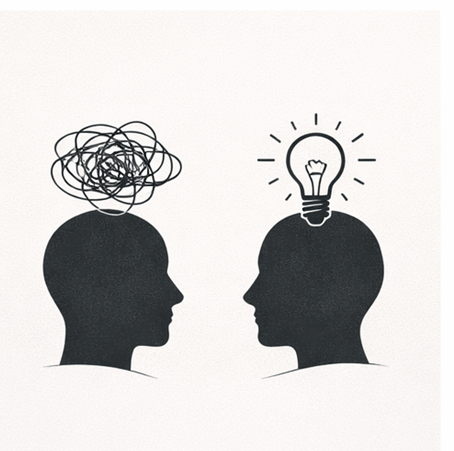
Perhaps this is why people are not always as rational as we like to think.
As such, consciously or subconsciously, influencers, content creators, motivational speakers, fitness personalities, and anyone else who uses words to influence minds, maybe even people like me, understand the power of framing. The way something is said can shape the way it is received. A particular phrase, a certain tone, or an emotional story can make people start thinking deeply about something that may have never crossed their minds before.
A carefully placed message can create a problem where none previously existed. A carefully chosen phrase can make people start worrying about something that had never occupied their thoughts before.
This raises an uncomfortable question: how many of the problems we see in other people’s lives are actually their problems and how many are simply our interpretations?
As I am reading the book Ikigai by Héctor García and Francesc Miralles, the community of Okinawa is described in ways that, from a modern perspective, might appear almost backward. Their lifestyle is simple. Many people live in small communities, grow their own food, and maintain routines that might seem outdated in a fast-paced, technology-driven world.
And yet, their levels of happiness and well-being are remarkably high. Their life expectancy is among the longest in the world. In fact, Okinawa has been recognized as one of the world’s “Blue Zones,” places where people consistently live longer, healthier lives.
What may look like a limitation from the outside may actually be part of the reason their lives are so full.
Perhaps it is because we are so engrossed in the world’s definition of what is modern, and in the hegemony of how “development” is supposed to look, that we often assume we have figured life out. Surrounded by big cities, bright lights, traffic, technology, and expensive lifestyles, it becomes easy to believe that this is the highest form of progress.
From that perspective, people living in rural areas can easily be viewed as lacking or left behind.
In many places, for example, people living in rural parts of Zimbabwe are sometimes looked down upon, as if a simpler life automatically means a lesser one. Yet those communities often possess things that modern environments struggle to cultivate: stronger social bonds, slower rhythms of life, deeper connections to land and community, and forms of resilience that do not always exist in highly urbanized spaces. What appears like “underdevelopment” through one lens may simply be a different way of organizing life.
None of this means that real problems do not exist. Of course they do. There are injustices that must be addressed, suffering that must be alleviated, and systems that must be challenged. But humility requires us to pause before diagnosing someone else’s life.
The world has given us unprecedented access to one another’s realities. Yet access does not automatically produce understanding. It requires the humility to recognize that our view of the world is only one view among many. The humility to question whether the problems we see are truly problems, or simply lives that do not resemble our own.
In a world that rewards quick conclusions, perhaps one of the most radical things we can do is sit with a little more uncertainty.
And occasionally ask ourselves whether the ants we see are really ants at all.
 The Ambiguous Space
Leave a comment