Social Media, Shifting Rules, and the Search for Identity
I am tired of all the rules. Are you not? Rules about everything. Fashion, diet, fitness, talking, walking, eating, anything you name it. There is a rule for it. And it has become worse with social media. Everyone is an expert. Spend a little time moving between platforms and you end up confused. Even when they are experts , doctors, dieticians, fitness trainers …..they contradict one another. So how are we supposed to function?
Now we are eating this.
Now we are not eating that.
Now we are wearing this.
Now that is outdated.
Now this is toxic.
Now this is healing.
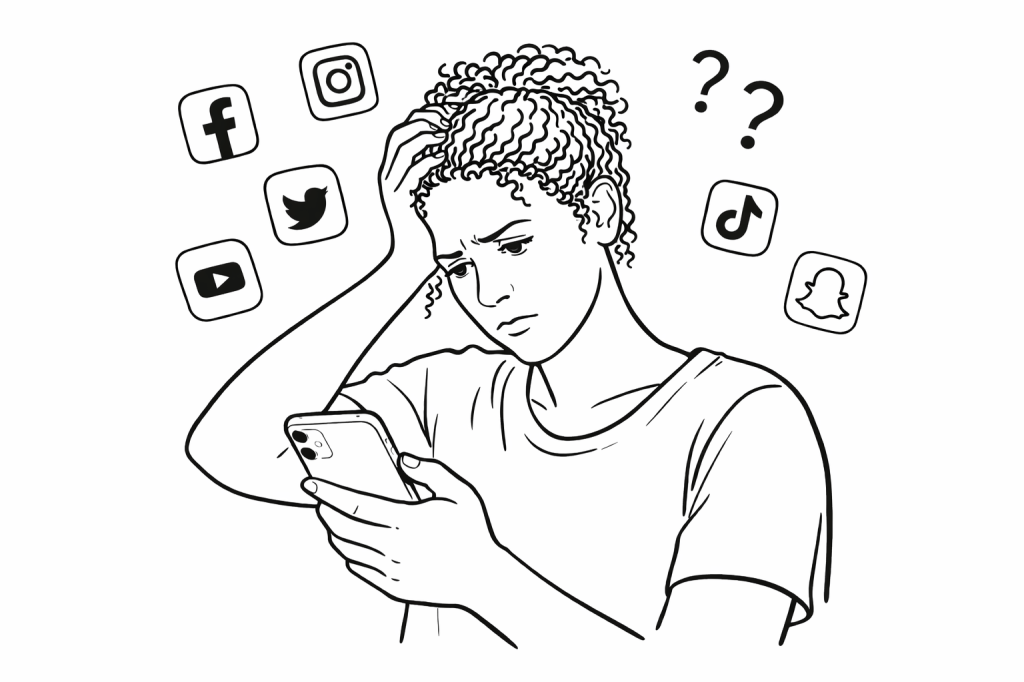
It is exhausting.
I am on very limited platforms just two and even that feels like a lot. It is not just information we are consuming. It is constant evaluation.
Comparison in a Curated World
In 1954, psychologist Gerard Festinger proposed Social Comparison Theory. He suggested that human beings have a fundamental drive to evaluate themselves by comparing themselves to others. We want to know: Am I doing okay? Am I right? Do I measure up? Festinger found that when individuals discovered others disagreed with them, they became less confident and often changed their views. But when others agreed, their confidence increased, and they rarely shifted. Comparison does not just inform us. It stabilizes what we believe is correct.
Now imagine that happening daily sometimes hourly through curated feeds!!!! Mind blowing!
Before computer-based communication became widespread, people had far less control over how they presented themselves. Now we curate. Filter. Edit. Perform. We are not comparing like with like. We are comparing our ordinary lives with someone else’s polished fragments. Research suggests that overexposure to upward comparative content i.e. content showing others as doing better affects self-perception. De Vries and Kühne (2015) found that Facebook use was linked to increased upward comparison and lower self-perceived social competence and attractiveness. Vogel et al. (2014) similarly found frequent Facebook use associated with lower self-esteem.
That quiet voice that says, You are behind. You are outdated. You need to improve.It is not simply insecurity. It is reinforced by constant comparison. And if you do not follow the trends, you are subtly placed at the margins.
Many times, when friends or colleagues talk about something trending, a celebrity scandal, a meme, a joke, a sports conflict, I find myself asking for background. Often, they are shocked that I have no idea what they are referring to. Marginal, it might seem. But if you ask me, it is strangely liberating. There is freedom in not needing to know everything. Freedom in not being carried by every trend, every outrage, every shifting consensus. Freedom in being slightly outside the noise.
Too Many Voices
Now that we are done with the academic research and evidence, let’s bring it back to reality…
As I was reflecting on this, I attended church on Sunday and the preaching spoke directly into this tension. The timing felt precise. What I had been wrestling with privately was being named publicly. Some statistics were shared in church that stayed with me. There are reportedly over 1.5 million Christian content creators generating more than 50 billion impressions across platforms. Thirty percent of Americans aged 18–54 report being “almost constantly online,” rising to 48% for ages 18–29. Podcast consumption has increased by 355% in the last ten years. Around 83% of listeners spend about nine hours weekly listening.
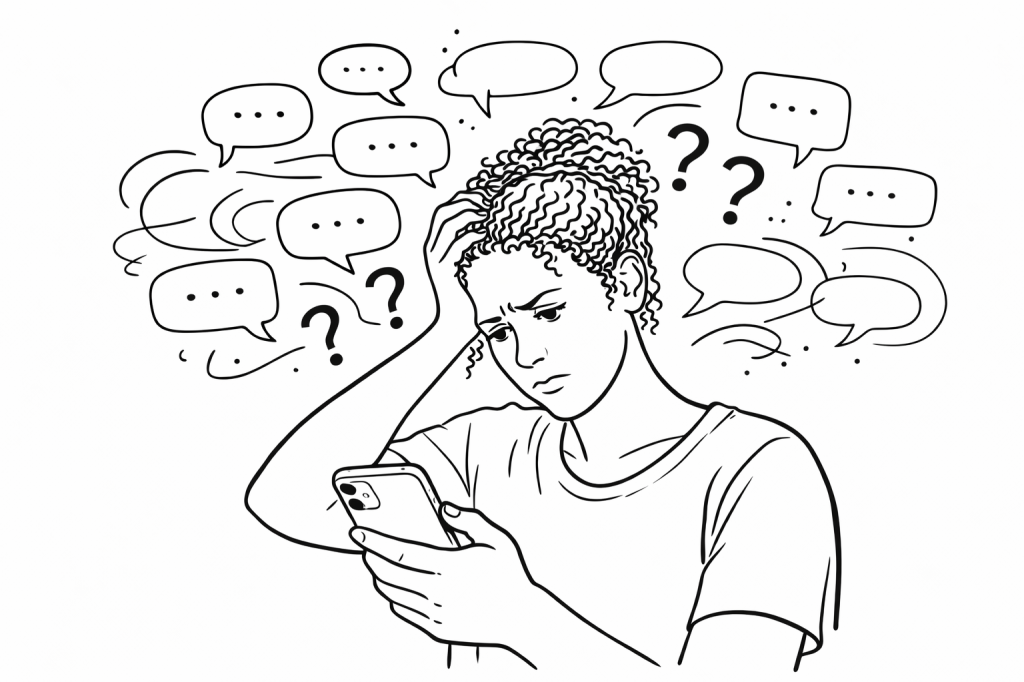
Nine hours!!!! That is more than a full working day absorbing other people’s voices, interpretations, convictions, frameworks. And that is just podcasts. Add scrolling, reels, sermons, news clips, commentary. This means we are rarely alone with our own thoughts. We carry a constant chorus in our heads.
How many voices are shaping us daily? And how many are we choosing intentionally?
Because here is the uncomfortable truth: we tend to choose content that affirms what we already believe. We follow voices that confirm our thinking. We subscribe to interpretations that validate our worldview. Sometimes we even gravitate toward content that amplifies our anxieties because it feels familiar. Now put that together with comparison…. how confusing is that?
Living in Ambiguity
We are always operating in ambiguity. What I believe versus what others believe, what I like versus what is acceptable, what I value versus what trends reward. Ambivalence becomes normal. We hold competing expectations at the same time and sit in tension. This is not the kind of productive ambivalence we speak about in this space. This feels destabilizing.
Sometimes it feels almost deliberate as though uncertainty keeps the system running, right? If we are unsure what is right, we keep searching. If we keep searching, we keep consuming. And if we keep consuming, we remain in motion , making us rarely anchored.
As I have always advocated for, ambiguity is not always negative. Life is complex, that’s not news. But when ambiguity is driven by comparison and shifting consensus rather than thoughtful discernment, it leaves us unsettled. We begin to doubt not just our choices, but ourselves.
Our identity and how it shifts sits at the centre of ambiguity, ambivalence, and even marginality. Are we ever fully content with what we have? Not really. Because the standard keeps shifting. Consensus changes. The group moves. And if Festinger was right, many of us move with it because agreement gives stability and disagreement produces doubt. In this ambiguity, it sometimes feels as though it does not matter what is true. We adapt to whatever is loudest even if we don’t truly see that as part of our identities. It’s popular or trending so it should be right!
Perhaps what we need is not more rules, more voices, more social media apps, or more podcasts though ironically, you may be reading this through one of them. When everything is externally defined — what to eat, what to wear, what to believe, what to aspire to — we slowly lose the ability to discern for ourselves, losing ourselves in the process.
What Centers You?
For me, that center is my faith. I am Christian. The Bible, in my own understanding and my personal relationship with God ground me. I emphasize my own because that is what I believe each person needs: not a borrowed understanding, not someone else’s interpretation, but a conviction wrestled with personally. Faith, like identity, cannot simply be outsourced.
This is not to say Christianity does not come with its own set of rules. Sometimes those rules even feel contradictory, depending on which church you attend, which pastor you follow, what theology you are exposed to, and honestly, what you are seeking or what your intentions are. My point, though, is this: when you are centred, you can discern. It also does not mean I have everything figured out. In fact, I am confused all the time. But I have somewhere to return to. A place that allows me to sit with ambiguity. A place that makes marginality less frightening.
Being centred does not remove complexity. It does not silence competing voices. But it gives you steadiness within them.
And maybe that is the quiet work in all of this, not mastering every new rule, not chasing every new voice, but cultivating a centre strong enough to hold you when everything else keeps shifting.
So perhaps the real question, as we continue to engage in social media, is not, What are the new rules?
But simply, What centers you? How am I centered in these rules? Who am I when the rules keep changing?
 The Ambiguous Space
Leave a comment