” But I am a man”
I hear this statement all the time. In dating, with male friends, male family members and even with work colleagues. Most often, in interactions where it comes up, have been with African men. I am from Zimbabwe, so I hope someone here can relate. But it is not just men from Zimbabwe. I will not name countries… Southern, Western… you know yourselves.
I am still trying to figure out what this statement is doing in those moments. Is it insecurity, an excuse, or a form of self-affirmation. I ask myself this every time it appears, because it never arrives randomly.
Masculinity Explained….
Sociologists and psychologists, and anyone else with the authority to do so, have long argued that masculinity is not simply something one is born with, but something learned, rehearsed, and repeatedly affirmed. It is shaped through expectations placed on boys and men around strength, authority, emotional restraint, and control. Masculinity, in this sense, is not only an identity, but a performance, one that requires recognition to hold its form.
Prof. E Wisdom writes about how from childhood, boys are socialised to embody resilience and stoicism, often at the expense of emotional expression. He describes what he calls the Man of Steel Syndrome, where men are trained to appear invulnerable and self-sufficient, even when this posture comes at a personal cost.
Now, before this starts sounding like I am an expert in this field, or like I am about to pursue another doctorate, let me pause right here. I am not an expert. I am simply paying attention. Observing. Asking questions, I probably should not be asking out loud. As stated, this site is about exploration, not resolution. It is a place to think out loud, to sit with questions that do not have immediate answers, and to allow ideas to remain unfinished. That is the whole point. My voice is not a theoretical, nor universal. I am speaking relationally.
“But I Am a Man” as a Boundary
So, back to the topic.
What is less often discussed is how these expectations show up in everyday interactions. Not in academic journals, but in day to day conversations about relationships, work, friendship, and unmet expectations. How masculinity announces itself not through action, but through language. For me, that announcement often comes in the form of a sentence. Or perhaps more accurately, a declaration.
“But I am a man.”
It is almost always declared when an expectation has not been met or cannot be met. Expectations from a partner, a work colleague, a friend, or in a social setting. The phrase tends to surface when something touches the ego. Often these are discussions that place women in positions of equalness rather than servitude. Conversations that quietly challenge assumed hierarchies. Conversations that do not shout or attack, but still somehow feel threatening. It could be anything, really. There is usually a pause before it. A tension. And then the statement appears, as if to close the conversation, sometimes gently, most times firmly.
‘…. but I am a man.’
Literature, webinars, and podcasts have, as outlined above, extensively explored masculinity, its construction, its pressures, and its consequences. I do think this framework explains some of what I encounter. But I do not think it explains everything.
Based on my interactions, what also seems present to the men who use this statement is an awareness, sometimes explicit, sometimes unspoken, that certain narratives already exist to justify particular behaviours. For example, the idea that men are naturally less expressive can be used to excuse emotional distance. The belief that men are meant to lead can quietly justify authority that has not been earned. Silence becomes framed as strength. Withdrawal as composure. Dominance as responsibility. These narratives are then drawn on or taken advantage of. If society has already said this is what men are, then why not inhabit it fully. Why resist it. Why attempt to change something that already comes with benefits, permissions, and exemptions.
Okay. Do not come at me yet. Hear me out.
I understand that men feel immense pressure to live up to certain ideals, to provide; to lead; to be strong (whatever that means); to be respected, to not fail… list is endless. I also understand that deviation from these scripts is often punished, mocked, or interpreted as weakness.
What interests me is how “I am a man” functions less as a description and more as a boundary. It marks the limits of responsibility, and most times signals where negotiation stops, or is expected to stop. What I hear when that statement is made is this, “This is as far as I will go.” There is no accountability here, no room to consider another point of view.
“This is what you can reasonably expect from me. This is non-negotiable.”
In this sense, the statement does not always emerge from fragility alone. Sometimes it is strategic. Sometimes it is protective. Sometimes it is convenient. It becomes a shield, not just against vulnerability, but against accountability. And this is where the tension sits.
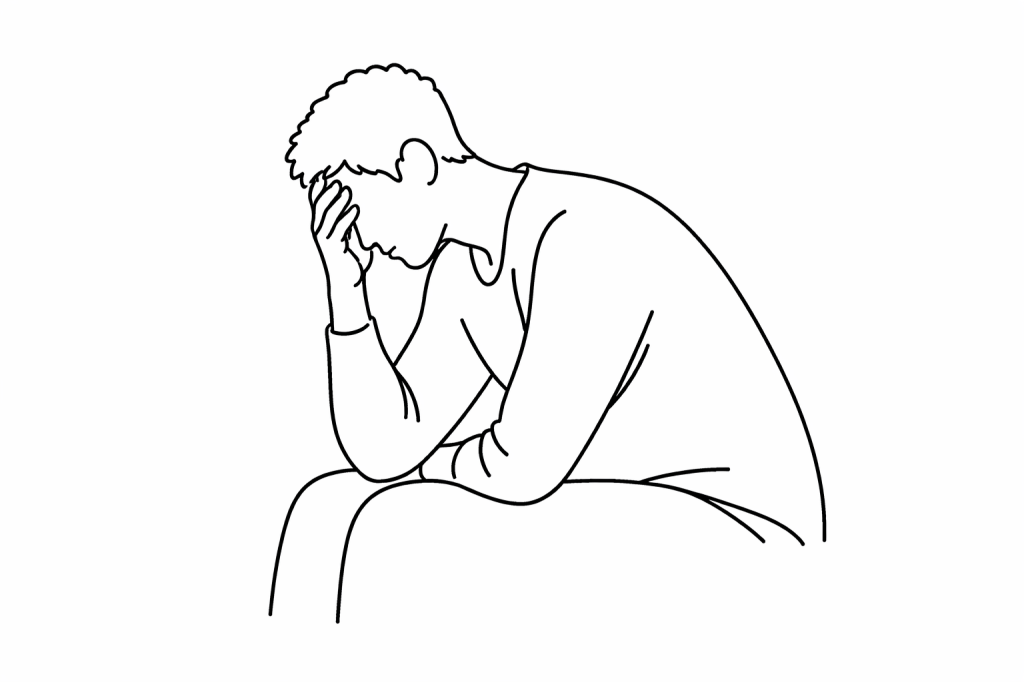
” But I am a woman”
Because when women speak from positions of equality, we do not have a sentence that closes the room. Our words are often read as hostile. At no point do we get to declare, “but I am a woman,” and watch the conversation respectfully dissolve. In fact, that declaration might just be the beginning of a very long interrogation.
Let me tell you something. I tried it once. I screamed it, actually.
“But I am a woman.”
Not for the faint hearted. The audacity. The absolute audacity.
In hindsight, maybe I should not have. But letting things slide has never really been my thing. What followed was not silence, or understanding, or even confusion. It was an interrogation. Or let me be honest, an attack.
“ What kind of woman are you. One who talks back? One who does not cook? Or doesn’t like to do laundry? One who behaves this way? One who does not want kids? The list went on, impressively so.
Again, if you are African and were raised in a patriarchal context, you will understand that these chores are not minor details. They are major expectations. Men expect to be served. In many cases, these tasks are not framed as preferences, but as obligations. But disclaimer again, this is not a universal argument. I am not speaking for all men, all African cultures, or all households. I am writing from experience, observation, and context.
When women make that declaration, or even attempt to, these questions may not be asked loudly, but they are almost always present, silently. So, we learn not to dare. Or perhaps we do not declare it because unlike men, whose inherited narratives sometimes work to their advantage when it suits them, women do not conform to, condone, or even recognise that singular story of what a woman is supposed to be.
I want to run away from it. It is far from who I am as a woman.
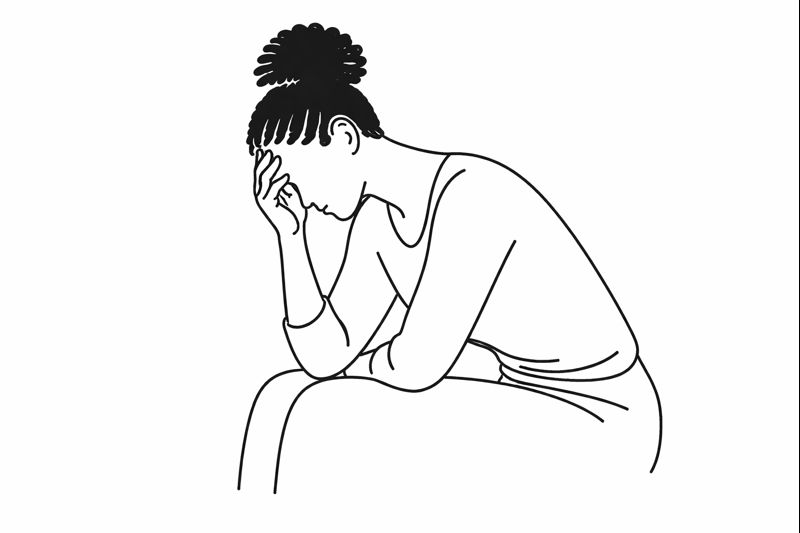
What Remains Unresolved
What remains unresolved for me is this. At what point does “but I am a man” become self-protection. And at what point does it stop being about safety and start becoming a refusal to engage, to listen, to change, or to be accountable. And who bears the cost of maintaining masculinity as something that must never bend.
I do not have clean answers. This is not a trial for all men, or maybe it is. I am not denying the cultural and structural pressures that fall on our African brothers. I am simply observing the greyness and ambiguity of how identity, power, and narrative intersect, and how one short sentence can carry the weight of history, expectation, and avoidance all at once.
In my perspective, “but I am a man” sometimes sounds less like confidence and more like a reminder to the room, and to themselves. As if masculinity needs to be spoken out loud in order to hold its shape. As if silence might cause it to soften, or worse, be questioned.
The phrase works because it has worked before. It has closed conversations. It has ended negotiations. It has been rewarded with patience, accommodation, and understanding. Over time, it learns its own power. Not because every man consciously wields it, but because the world often responds predictably when it is spoken.
It makes me wonder what other statements like this show up in different interactions?
Let’s chat!

 The Ambiguous Space
Leave a comment